
Tibet Travel Guide
Discover the timeless beauty of Tibet, a land where ancient monasteries, sweeping Himalayan landscapes, and deep spiritual traditions come together in a way found nowhere else on earth.
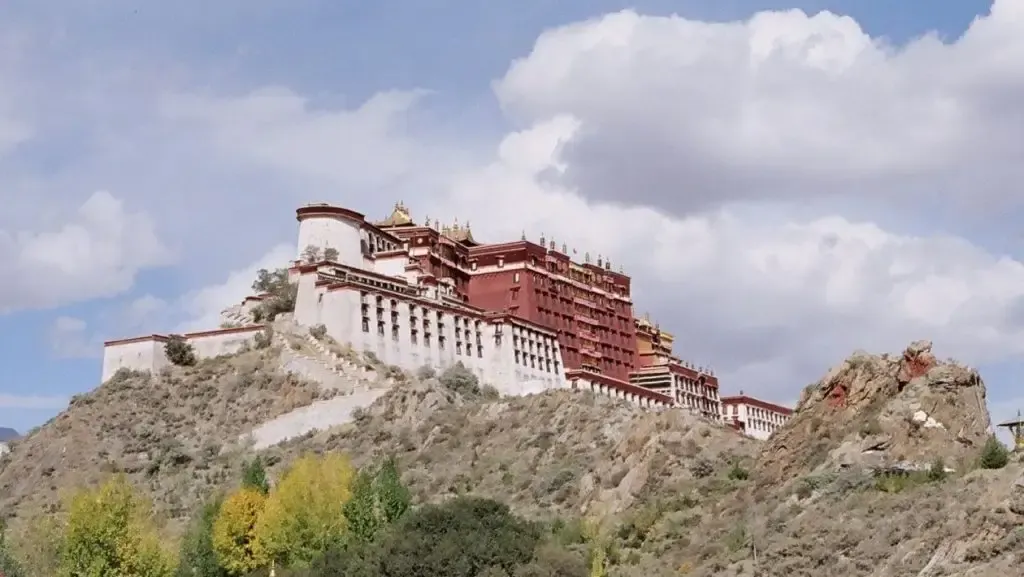
Potala Palace, Tibet. Photo Credit: Walter Somers
Entry Requirements
Foreign travelers entering the Tibet Autonomous Region must obtain a Tibet Travel Permit (TTP), which requires holding a Chinese visa and a passport valid for at least six months. Independent travel is not allowed, you must join an organized tour arranged through a licensed travel agency, which will handle the permit application on your behalf. Processing typically takes 15–30 days.
Chinese Visa Requirements
You will need to secure a standard Chinese visa, usually a Type L tourist visa, in your home country before applying. Certain nationalities, such as France, Germany, and Australia, currently qualify for visa‑free stays of 15 to 30 days through December 31, 2026. For more details, please visit the website of China’s National Immigration Administration.
US Citizens require a Chinese visa to enter Tibet.
Entry from Mailand China (Standard Visa)
If you plan to enter Tibet from mainland China, flying through cities such as Beijing, Shanghai, or Chengdu, you’ll need a standard Chinese Tourist Visa (L Visa). Most U.S. citizens automatically qualify for a 10‑year multiple‑entry visa. Through December 31, 2026, the consular fee is a flat $140 USD, regardless of validity or number of entries.
Visa Application: To apply, complete the China Online Visa Application (COVA) at consular.mfa.gov.cn. Since January 1, 2024, U.S. applicants for tourist visas generally no longer need to provide flight itineraries, hotel bookings, or invitation letters. After submitting the online form, you must take your passport and printed application to the appropriate Chinese embassy or consulate, either in person or through an agent. Walk‑ins are currently accepted without an appointment.
Document Checklist for U.S. Travelers
Photo: One recent 2×2‑inch color passport photo with a white background.
Passport: Must be valid for at least six months and contain two blank visa pages.
Proof of Residence: Provide a copy of your driver’s license or a utility bill to confirm you are applying at the correct consulate for your jurisdiction.
A helpful tip: When filling out the visa application, it’s often better to list destinations such as Beijing or Chengdu, your port of entry into China, rather than “Tibet,” as consulates may request your Tibet Travel Permit, which you can only obtain after receiving your visa.
Entry from Nepal (Group Visa)
There are two types of visa and entry procedures for traveling to Tibet from Nepal that remain in practice in 2026.
Group Visa: First, your tour operator must arrange a Visa Invitation Letter from the Tibetan tourism authorities in advance. With this document, you can then apply for the China Group Visa at the Chinese Embassy in Kathmandu. You must allow at least five working days for processing.
The group visa is issued on a separate sheet of paper rather than stamped into your passport, and it must be obtained through your authorized travel agency in Nepal.
Individual Visa Plus Tibet Entry Permit: Individual Visa Plus Tibet Entry Permit: If you already hold a valid individual Chinese visa in your passport, you can enter Tibet with the additional Tibet Entry Permit arranged by your tour operator. Unlike in the past, your existing visa is no longer canceled under this arrangement. This option is ideal if you don’t have five working days in Kathmandu before entering Tibet.
Tibet Travel Permit (TTP)
The Tibet Travel Permit (TTP), also called the Tibet Entry Permit or TTB Permit, is a required document for all foreign nationals, including U.S. citizens, traveling into the Tibet Autonomous Region. Issued by the Tibet Tourism Bureau, it is a two‑page physical permit that lists your travel group, authorized travel dates, and approved itinerary.
Key Application Requirements
No Self‑Application: Travelers cannot apply for the permit on their own. A licensed Tibet travel agency must handle the process as part of a pre‑arranged guided tour.
Guide Required: You must travel with a licensed guide and have a pre‑booked private vehicle throughout your stay in Tibet.
No Government Fee: The permit itself is officially free, but the service charge and delivery fee are usually built in the tour cost.
Documents Needed:
Clear color scan of your passport (valid for at least 6 months).
Clear scan of your Chinese visa.
If the passport containing your valid Chinese visa has expired, and the visa itself is still valid, you must provide color scans of both the expired passport and your current passport.
Receiving and Using Your Permit
Entering from Mainland China:
The original paper permit is shipped to your hotel in mainland China before your departure for Tibet.
Flights: You must present the original physical permit to board any domestic flight to Lhasa.
Trains: A printed copy is usually acceptable for most train routes to Lhasa, though the original permit is required when departing from Chongqing, Xi’an, or Lanzhou.
Entering from Nepal:
You do not need to carry the permit yourself. Your Tibetan guide will hold the original document and meet you either at the Gyirong Port border crossing or upon arrival at Lhasa Airport.
Best Time for Travel to Tibet
The best overall season to visit Tibet runs from April through October, with May and October standing out as the prime months thanks to clear skies, stable weather, and pleasant temperatures.
Seasonal Overview
Spring (April- May): Ideal for Mount Everest views, Nyingchi Photography
What to Expect: Warming temperatures and clear, crisp air. The ice on high-altitude lakes like Namtso begins to melt.
Best For: Viewing Mount Everest (clearest skies) and seeing peach blossoms in Nyingchi.
Notable Festival: Saga Dawa (May/June) – Celebrates Buddha’s birth and enlightenment with massive ceremonies in Lhasa and Mt. Kailash.
Challenges: Higher altitudes remain very cold at night; some mountain passes may still have lingering snow. Fewer flights.
Perks: Fewer crodws than summer and excellent visibility for photography
Summer (June–August): Lush Landscapes During Monsoon
What to Expect: The warmest weather of the year with the highest oxygen levels (making breathing easier). It is the “rainy season,” though rain usually falls briefly at night.
Best For: Family travel, high-altitude trekking, and lush green grasslands.
Notable Festival: Shoton Festival (August) – Known for “Yogurt” celebrations, giant Thangka unveilings, and Tibetan opera.
Challenges: Peak tourist season means higher prices and crowded sites in Lhasa; clouds may hide Everest’s peak.
Perks: Most comfortable temperatures for those sensitive to the cold.
Autumn (September – October)
What to Expect: A “second spring” with stable weather, deep blue skies, and turning leaves.
Best For: Overland tours from Lhasa to Kathmandu or Everest Base Camp.
Notable Festival: Palden Lhamo Festival (October/November) – A colorful festival dedicated to the protective deity of Lhasa.
Challenges: The first week of October (Chinese National Day) is extremely busy with domestic tourists.
Perks: The “Golden Window” for trekking and the most reliable weather for long-distance driving.
Winter (December–February):
What to Expect: Dry, cold, but intensely sunny days. Lhasa feels like a “sunlight city” even in January.
Best For: Budget travel and authentic cultural immersion.
Notable Festival: Tibetan New Year (Losar) (February/March) – The most important holiday, though the region often closes to foreigners during this time.
Challenges: Biting cold at night; many remote guesthouses and high-altitude roads may close.
Perks: Major discounts on hotels/flights and a 100% authentic atmosphere as Tibetan pilgrims outnumber tourists.
How to Get to Tibet and Away
To get to Tibet and away, you must travel via mainland China or Nepal. International travelers cannot enter Tibet independently and must have a pre-arranged tour with a licensed agency to obtain the necessary permits.
Getting to Tibet from Mainland China
This is the most common entry route. You must first secure a standard Chinese Visa (L-Type for tourists) before we can apply for your Tibet Travel Permit.
By Flight (Fastest)
Direct flights to Lhasa Gonggar Airport (LXA) depart daily from major hubs like Chengdu, Chongqing, Xi’an, Beijing, and Shanghai. Chengdu is the most popular gateway due to the highest frequency of flights.
By Train (Scenic)
The Qinghai–Tibet Railway offers a 20- to 54-hour journey.
Xining is the best starting point, offering the shortest ride (approx. 20 hours) and the best scenery, although you can take the train from Beijing, Shanghai or other major cities.
Acclimatization: The gradual ascent can help your body adapt to the altitude.
By Road (Adventurous)
Overland routes like the Sichuan-Tibet Highway (G318) or Yunnan-Tibet Highway offer immersive scenery but require at least 10 days of driving.
Getting to Tibet from Nepal
You can enter Tibet from Nepal either overland or by flight.
By Flight (Fastest, and scenic)
Kathmandu‑based Himalaya Airlines operates flights between Kathmandu and Lhasa Gonggar Airport as of 2026 (approx. 1.5 hours). Service remains limited, with around four flights per week during the peak summer season and about two flights weekly during the shoulder and low seasons. For updated flight schedule and booking the reservation, visit Himalaya Airlines website.
The flight is especially rewarding, offering sweeping views of the Himalaya, including the chance to see Mount Everest, the highest peak on Earth, along with several other towering 8,000‑meter mountains.
By Road via Gyirong Port (Adventurous, scenic)
This is the primary land border for international travelers. A typical road trip from Kathmandu to Lhasa takes about 7-8 days with an option to side trip of Everest Base Camp.
Currency, Payments, and Connectivity
Navigating money and communication in Tibet equires specific preparation, as the region is heavily integrated into China’s digital ecosystem while remaining remote in its rural areas.
Currency & Payments
Official Currency: The Chinese Yuan (CNY), or Renminbi (RMB), is the only accepted currency.
Mobile Payments (Primary Method): Alipay and WeChat Pay are widely used throughout Tibet, from high‑end hotels to small market stalls.
Setup for U.S. Travelers: You can link a Visa or MasterCard to these apps. It’s important to complete setup and passport verification before arriving in China so you can receive SMS verification codes.
Fees: International card payments over 200 RMB typically incur a 3% processing fee.
Cash as Backup: Always carry some cash in CNY, especially for tipping guides and drivers, traveling in remote regions (such as Everest or Kailash), or in case digital payments are unavailable.
ATMs: Reliable ATMs that accept foreign cards (Visa/MasterCard/Plus) are available at Bank of China (BOC) and ICBC branches in Lhasa and Shigatse.
Currency Exchange: Foreign currency can be exchanged only at major BOC branches or select upscale hotels in Lhasa.
Credit Cards: Physical international credit cards are rarely accepted, except at 5‑star hotels and a few high‑end shops in Lhasa.
Connectivity and Internet
Mobile Networks
Coverage is strong in major cities such as Lhasa and Shigatse, with widespread 4G and growing 5G service. Along major tourist routes, connectivity is generally reliable, and China Mobile tends to offer the best signal in remote regions like Everest Base Camp.
SIM Cards & Roaming
Local SIM: You can purchase a prepaid SIM card (passport required) at airports or authorized shops in major cities. This is the most economical way to ensure data access for mobile payments.
International Roaming: Convenient but costly. Some U.S. carrier roaming plans may occasionally bypass local internet restrictions.
Blocked Services
Restricted Platforms: Google services (Maps, Gmail, Search), WhatsApp, Facebook, Instagram, and similar platforms are blocked on Chinese networks.
Travel eSIMs: Providers like Nomad or Airalo often offer a simpler alternative, allowing continued use of WhatsApp and Google with minimal setup.
Essential Cultural Etiquette in Tibet
In Temples and Dzongs
Clockwise is Key: Always walk around monasteries, stupas (pagodas), and prayer wheels in a clockwise direction. (The only exception is the Bon religion, which goes counter-clockwise).
Dress Code: Wear modest clothing. Shoulders and knees should be covered. Remove your hat and sunglasses before entering a chapel.
Hands Off: Do not touch Buddha statues, ritual objects, or the heads of monks/locals.
No Smoking/Alcohol: These are strictly forbidden on monastery grounds.
Donations: It is common to leave a small bill (1–5 CNY) on altars as an offering.
Body Language
The “Pointing” Rule: Never point with a single finger, as it’s considered rude. Use an open palm facing upward to gesture toward a person or a sacred object.
Feet Etiquette: When sitting on the floor in a temple or a local home, cross your legs. Never point the soles of your feet toward people, Buddha statues, or a hearth.
Public Affection: Avoid public displays of affection (hugging, kissing), as Tibetan culture remains very conservative.
Quiet Tones: Speak softly inside religious sites; shouting or loud laughter is seen as disrespectful.
Photography
Inside Chapels: Photography is strictly prohibited inside most monastery chapels. Some may allow it for a high “camera fee” (often 20–100 CNY), but always ask your guide first.
Taking Photos of People: Always ask for permission before photographing locals, especially pilgrims or monks. A simple nod and a smile usually suffice.
Military & Police: Never take photos of military personnel, police stations, checkpoints, or government buildings. This can lead to your camera being confiscated or your permit being revoked.
Social and Table Manners
The Tea Ritual: If invited for Yak Butter Tea, wait for the host to bring the cup to you. Take a small sip, and the host will immediately refill it. It’s polite to finish the bowl only when you are ready to leave.
Accepting Gifts: Use both hands to give or receive items (money, tea, business cards) as a sign of respect.
Hada (White Scarf): If presented with a Hada (a ceremonial silk scarf), accept it with both hands and bow slightly.
Important Laws & Restrictions
Zero Tolerance for Drugs: China has extremely strict drug laws. A positive drug test, even for substances legal in your home country (like cannabis), can result in immediate detention, heavy fines, and deportation.
Physical Registration: All foreigners must be registered with the local Public Security Bureau (PSB) within 24 hours of arrival. Your hotel or guide will usually handle this, but you should ensure it is completed.